
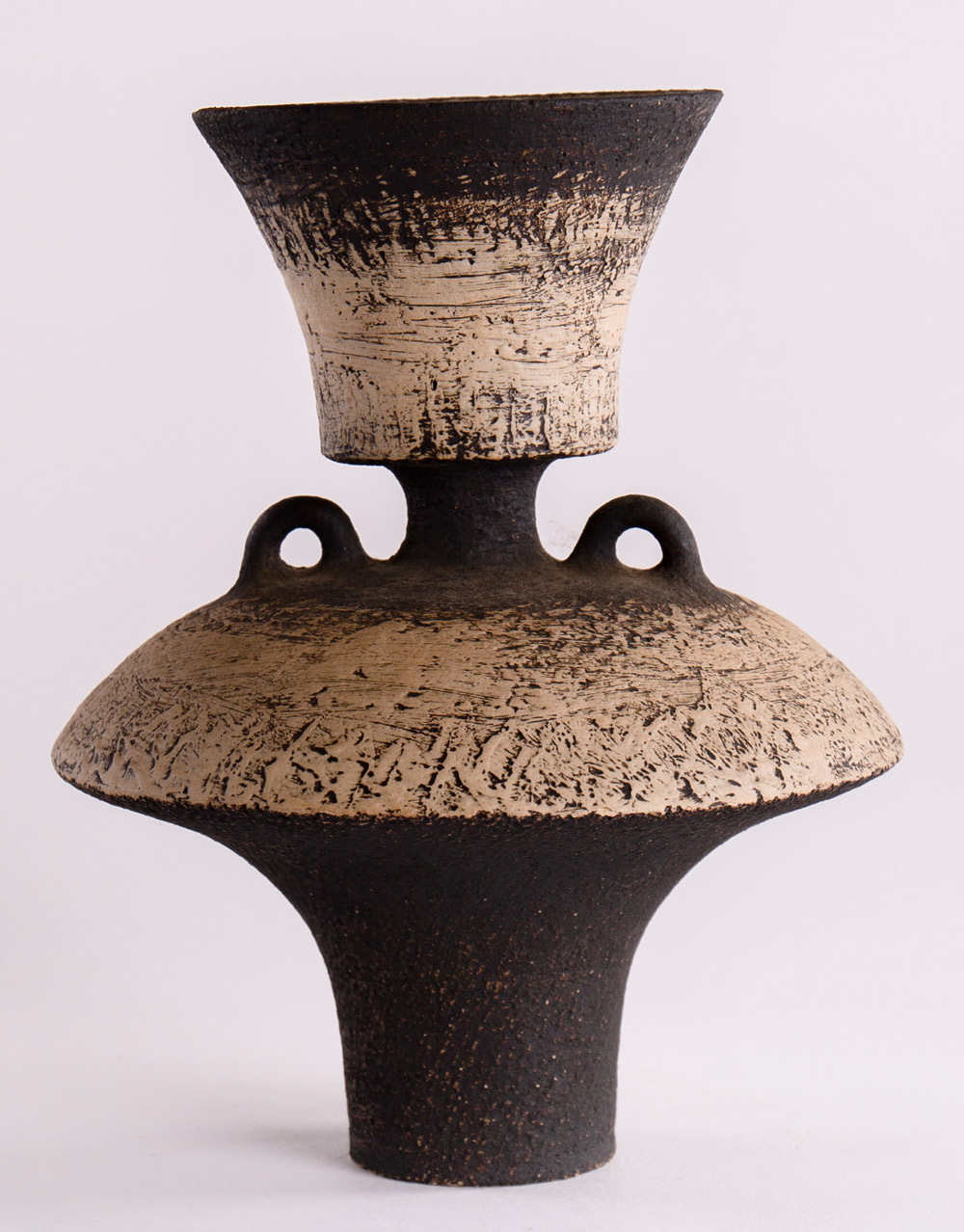
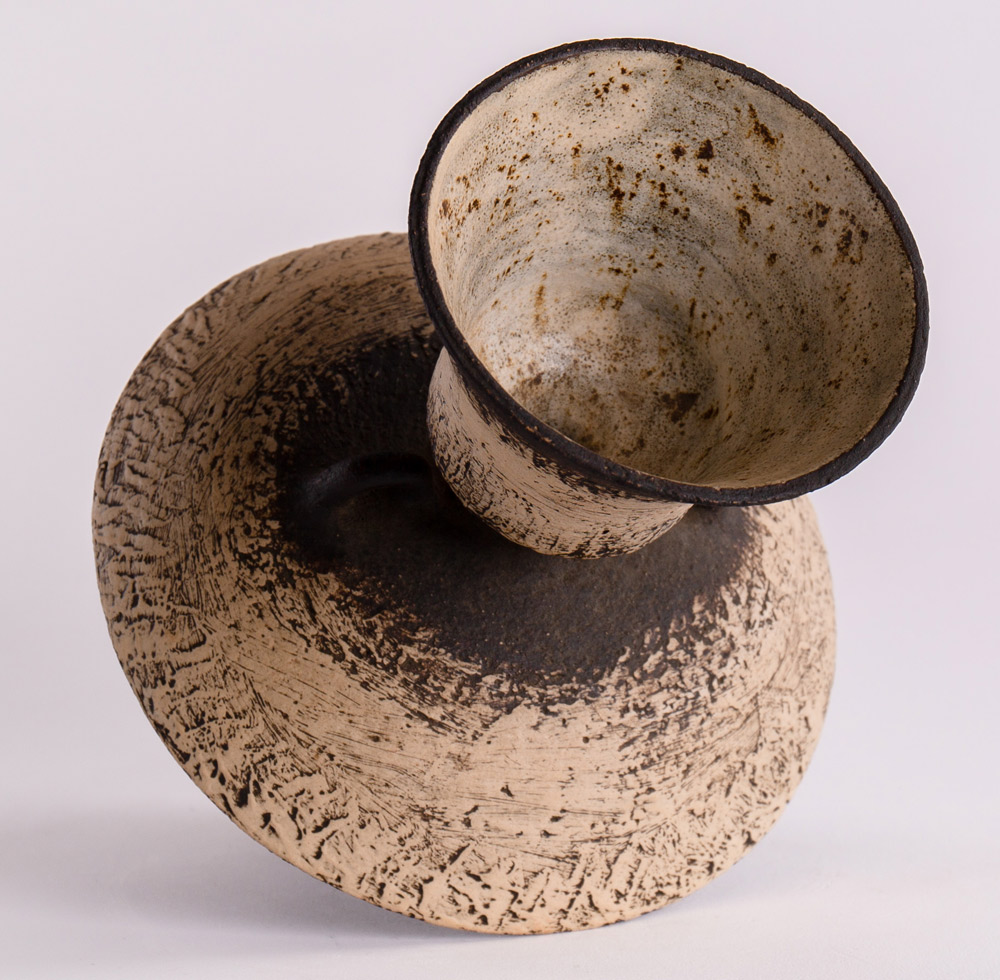
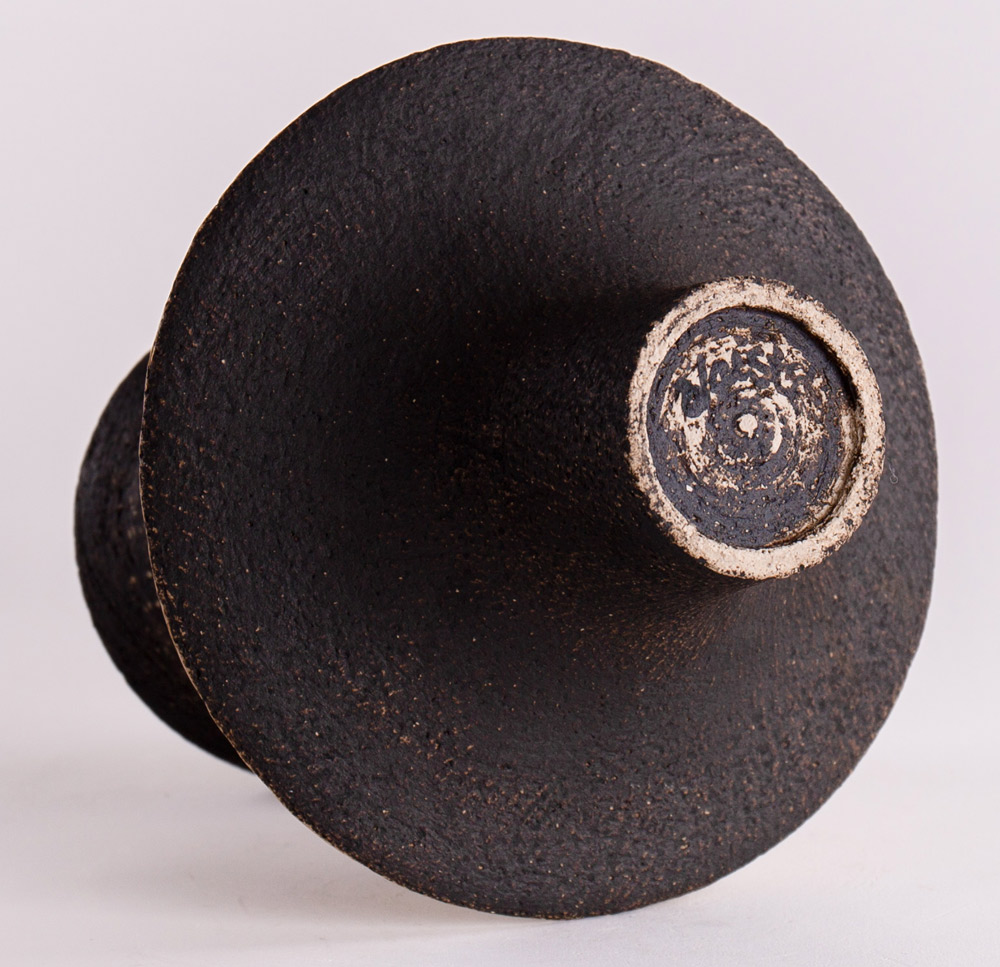
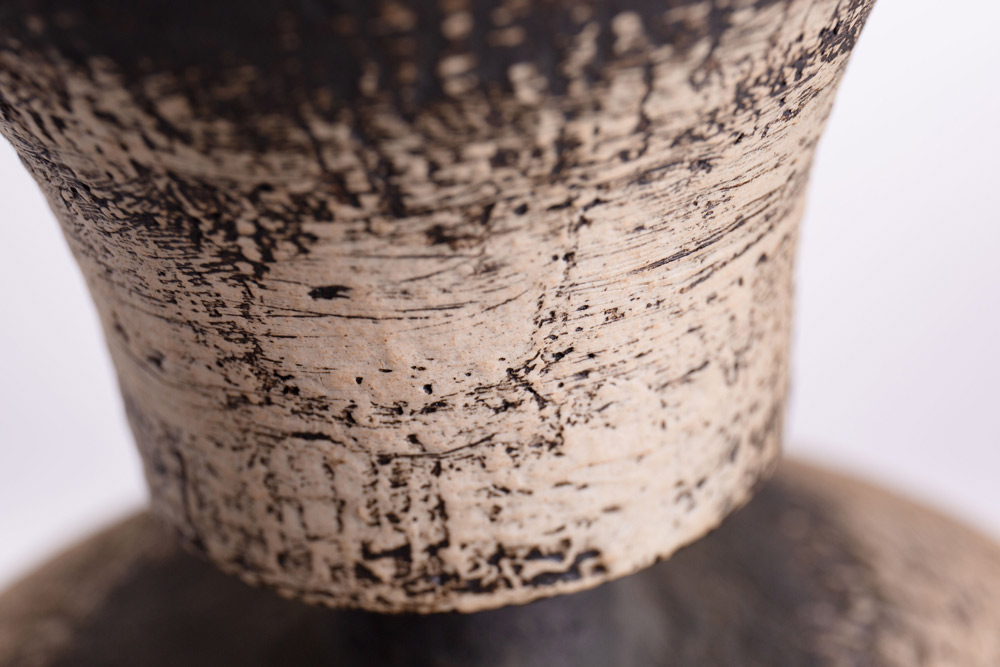
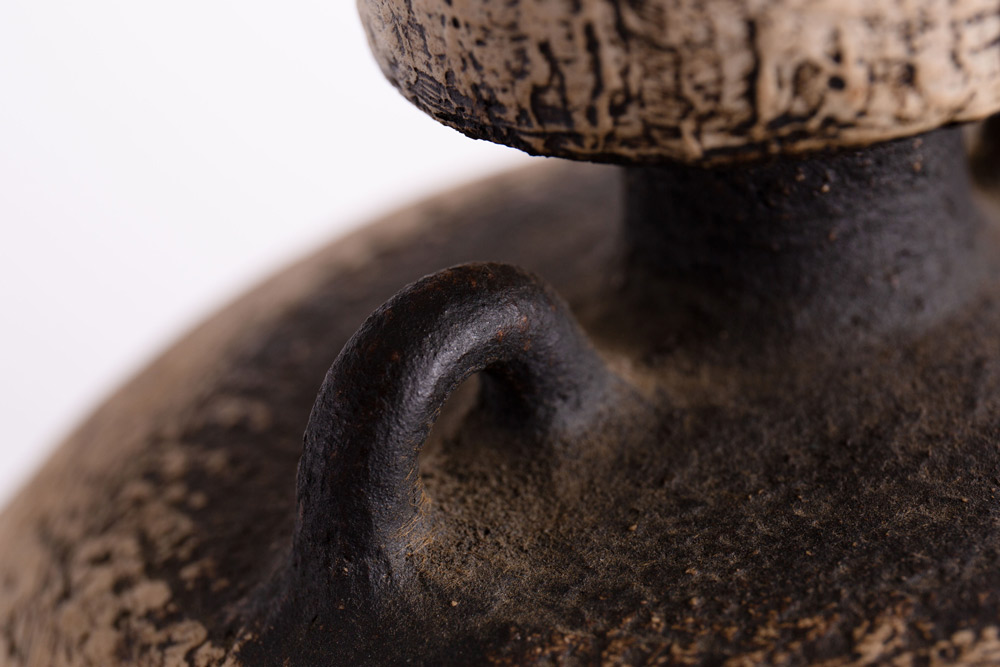
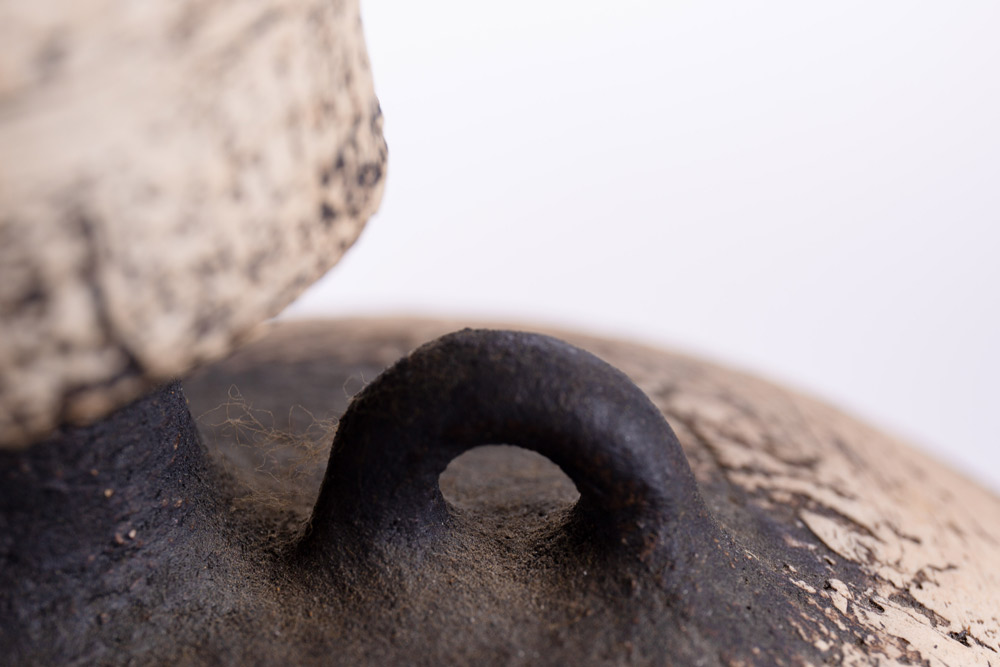
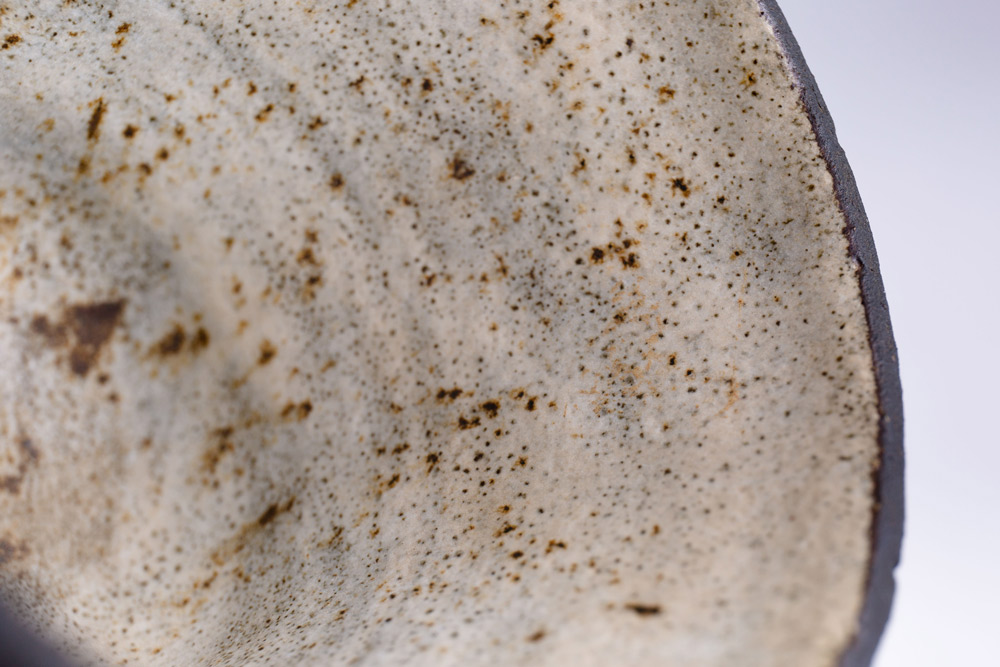
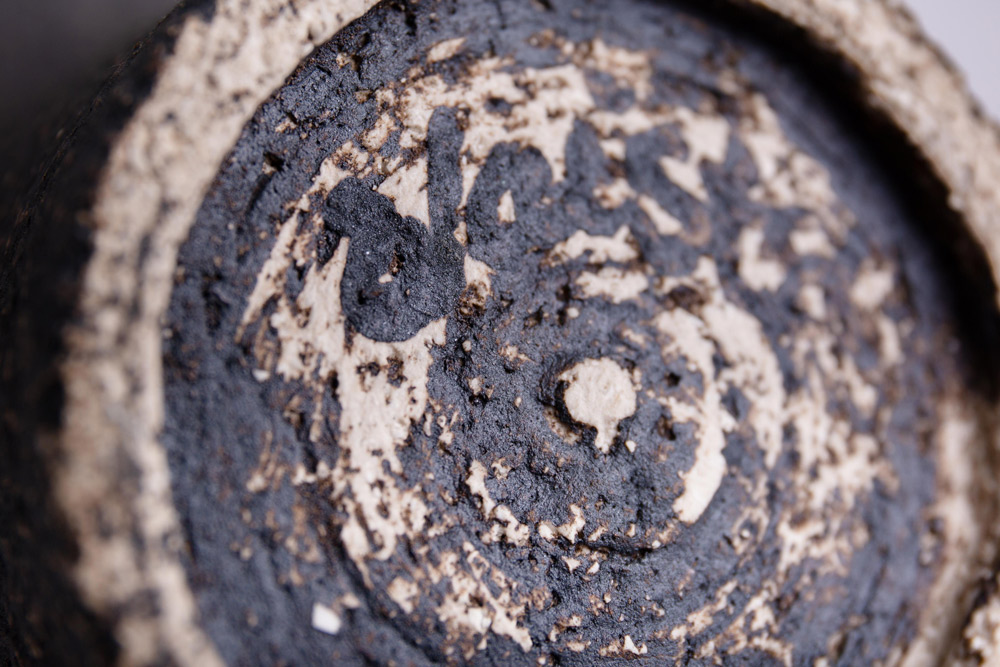
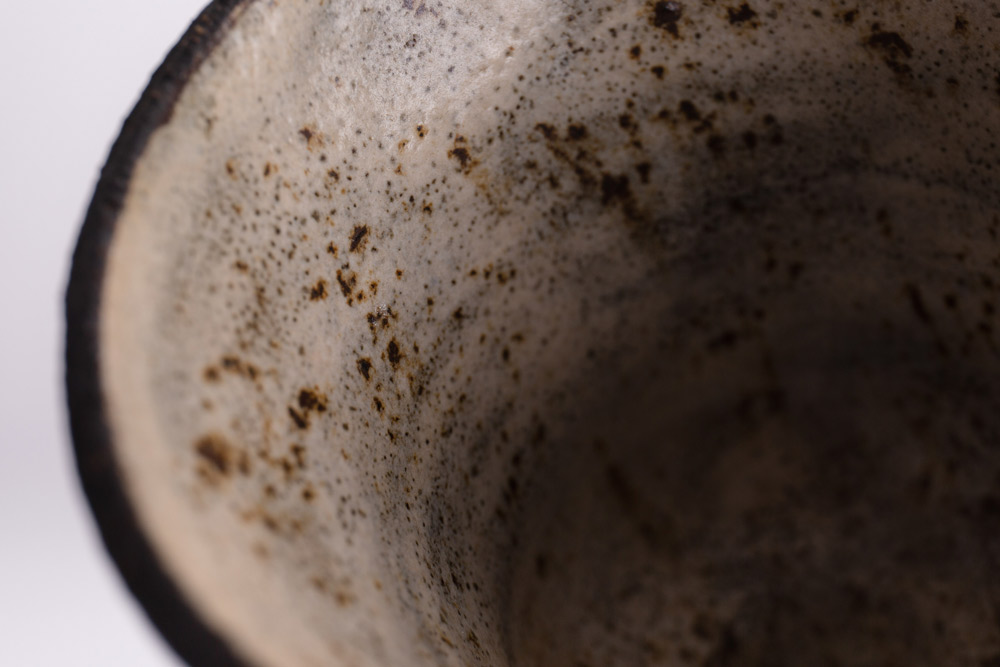
Description
Waistel Cooper biography
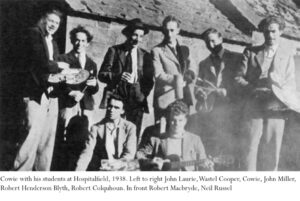
Waistel Cooper was a visionary artist-potter whose work helped transform the landscape of post-war British ceramics. Born in Ayr, Scotland, in 1921, he showed early promise as a draughtsman and painter, winning a scholarship to Hospitalfield School of Art at just sixteen, where he studied alongside Robert Colquhoun and Robert MacBryde under the influential teacher James Cowie. His early career was devoted to portraiture, informed by continental cubism and modernist ideas, before a decisive encounter with ceramics redirected his path.
After service in the Royal Artillery during the Second World War, Cooper moved to London, immersing himself in the bohemian art scene of the 1940s. A period in Iceland proved transformative: there, with the sculptor Gestur Thorgrímsson, he experimented with hand-built kilns, locally sourced clays, and volcanic rock, creating bold new forms inspired by the raw landscape. This early foray into pottery ignited his lifelong fascination with texture, material, and sculptural form.
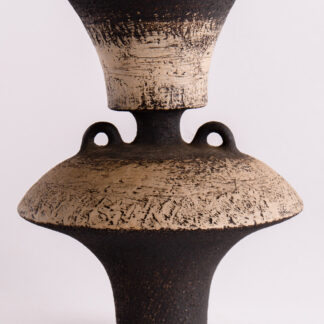
On returning to England in the early 1950s, Cooper began to establish himself as part of a new generation of studio potters seeking a modern alternative to the decorative traditions of Bernard Leach. Exhibiting at Henry Rothschild’s Primavera Gallery and internationally at the Stedelijk Museum, Amsterdam, his “rough” stoneware forms won early recognition. His first major solo show, Ceramic Texture (1955), predated Hans Coper’s debut exhibition and confirmed his reputation as an independent innovator rather than a follower of his contemporaries Lucie Rie and Coper.
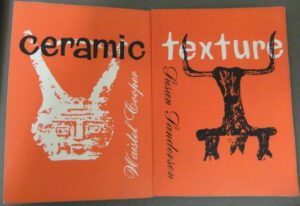
Waistel Cooper Ceramic Texture, Primavera 1955
In 1956, Cooper and his wife Joan D’Arcy Jeancon settled at Culbone on Exmoor. There, in a secluded woodland valley, he established a studio that would remain his base for nearly three decades. The natural environment deeply informed his work: surfaces became rough, organic, and textured, echoing bark, stone, and undergrowth, while glazes drew on the materials of the surrounding landscape. During this period, his ceramics were included in exhibitions with the leading modernist artists of the time, most notably the Council of Industrial Design and Smithsonian’s British Artist Craftsmen (1959), which toured North America and featured his work alongside Henry Moore, Barbara Hepworth, and Elizabeth Frink.
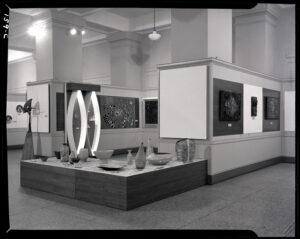
Throughout the 1960s and early 1970s, his ceramics were widely exhibited and collected by museums in Britain and abroad, including institutions in Edinburgh, Glasgow, Dundee, and the United States. Yet by the late 1970s, Cooper had largely withdrawn from the commercial gallery world, preferring to sell his work directly from his Culbone garden studio.
In 1982, following the death of his wife, he relocated to Penzance, where a new phase of work emerged. The earthy woodland textures of Culbone gave way to lighter, coastal tones — rough whites and greys with flashes of azure blue, echoing Cornish granite and sea light. Cooper continued to produce ceramics and sculpture until the late 1990s, exhibiting with the Penwith Society of Arts as part of the St Ives School.
Waistel Cooper died in 2003, by which time his reputation had unjustly faded into near obscurity. Today, however, he is increasingly recognised as a pioneering force in twentieth-century British ceramics. His work bridges the worlds of sculpture and pottery, embodying both the modernist search for pure form and a deeply personal response to place and material.
Waistel Cooper exhibitions and public collections
Waistel Cooper’s ceramics are in the collections of many prestigious public institutions and galleries including the Victoria & Albert Musuem London, Stedjelik Museum Amsterdam, Manchester City Art Gallery, Glasgow Museums, Paisley Museum & Art Gallery, National Museums Liverpool, Newark Art Gallery U.S.A., Royal Museum of Scotland, Portsmouth Musuem, Leicester Museum, Dundee Art Gallery & Museum, Bristol Museum, Cleveland Craft Centre, Aberdeen Art Gallery.


Reviews
There are no reviews yet.