
In 1956, Waistel Cooper and his wife Joan settled in Culbone, a remote valley on Exmoor overlooking England’s smallest parish church. Their home, Keeper’s Lodge, was tucked deep into ancient woodland, far removed from city life and the commercial art world. For nearly three decades this secluded landscape would shape the rhythm of Cooper’s working life, and profoundly influence the character of his ceramics.
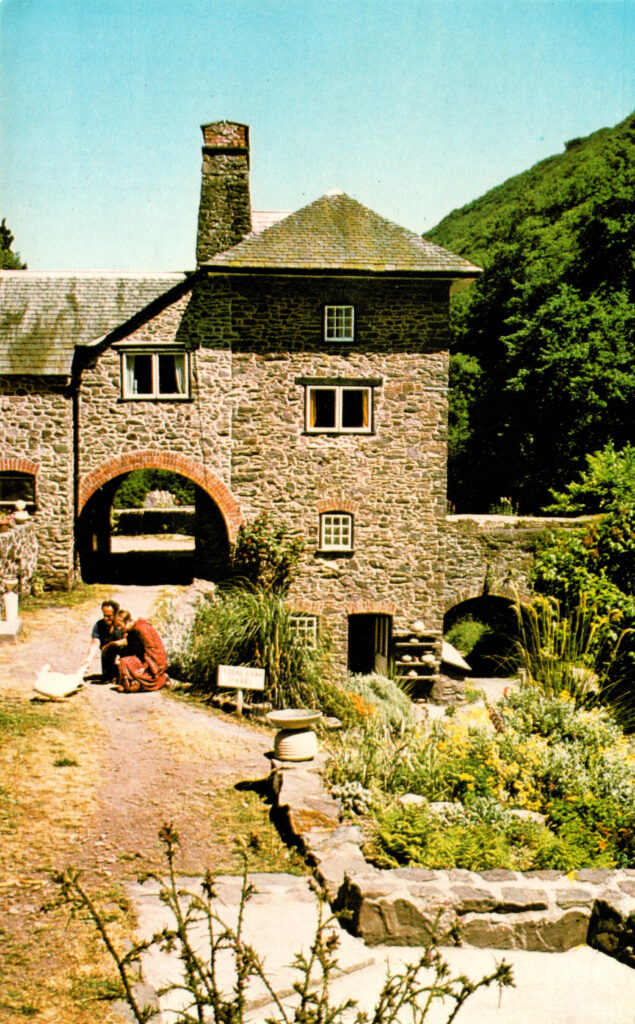
Waistel & Joan Cooper at Culbone Lodge, West Somerset
At Culbone, Cooper built a studio equipped with a kick-wheel and oil-fired kiln. Surrounded by ferns, fungi, and the dense undergrowth of the forest, he drew inspiration directly from nature. His surfaces became rough and organic, textured like bark or moss, while his glazes often incorporated natural materials gathered from the environment around him. The pots of this period are powerful and sculptural, earthy and elemental, their forms resonating with the rhythms of growth and decay in the woodland setting.
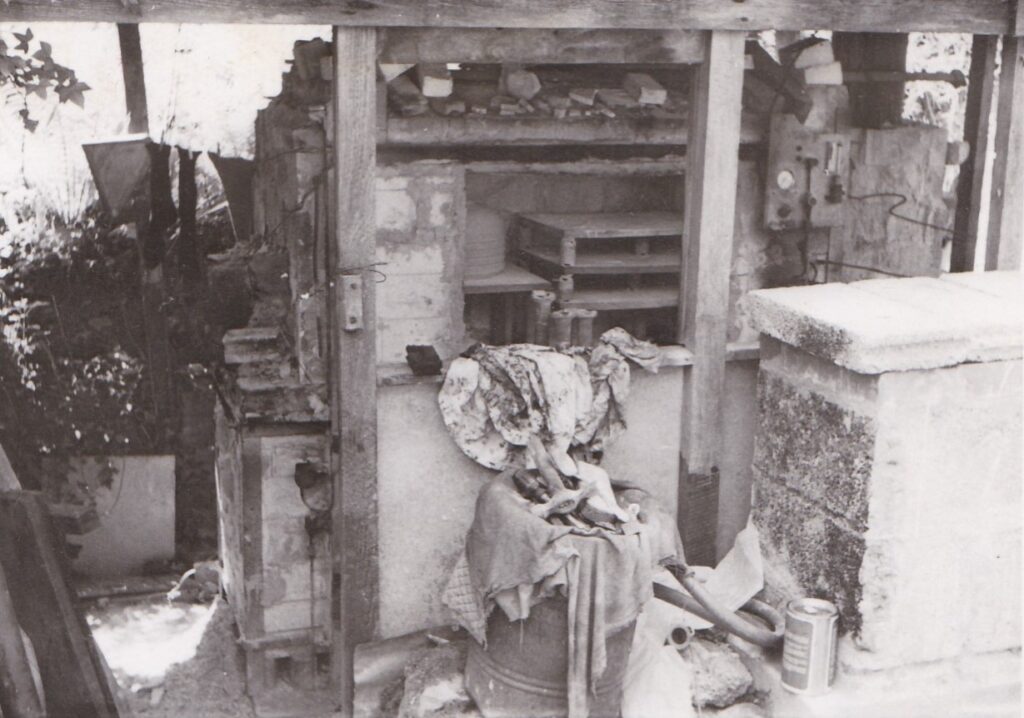
Waistel Cooper’s kiln, Culbone
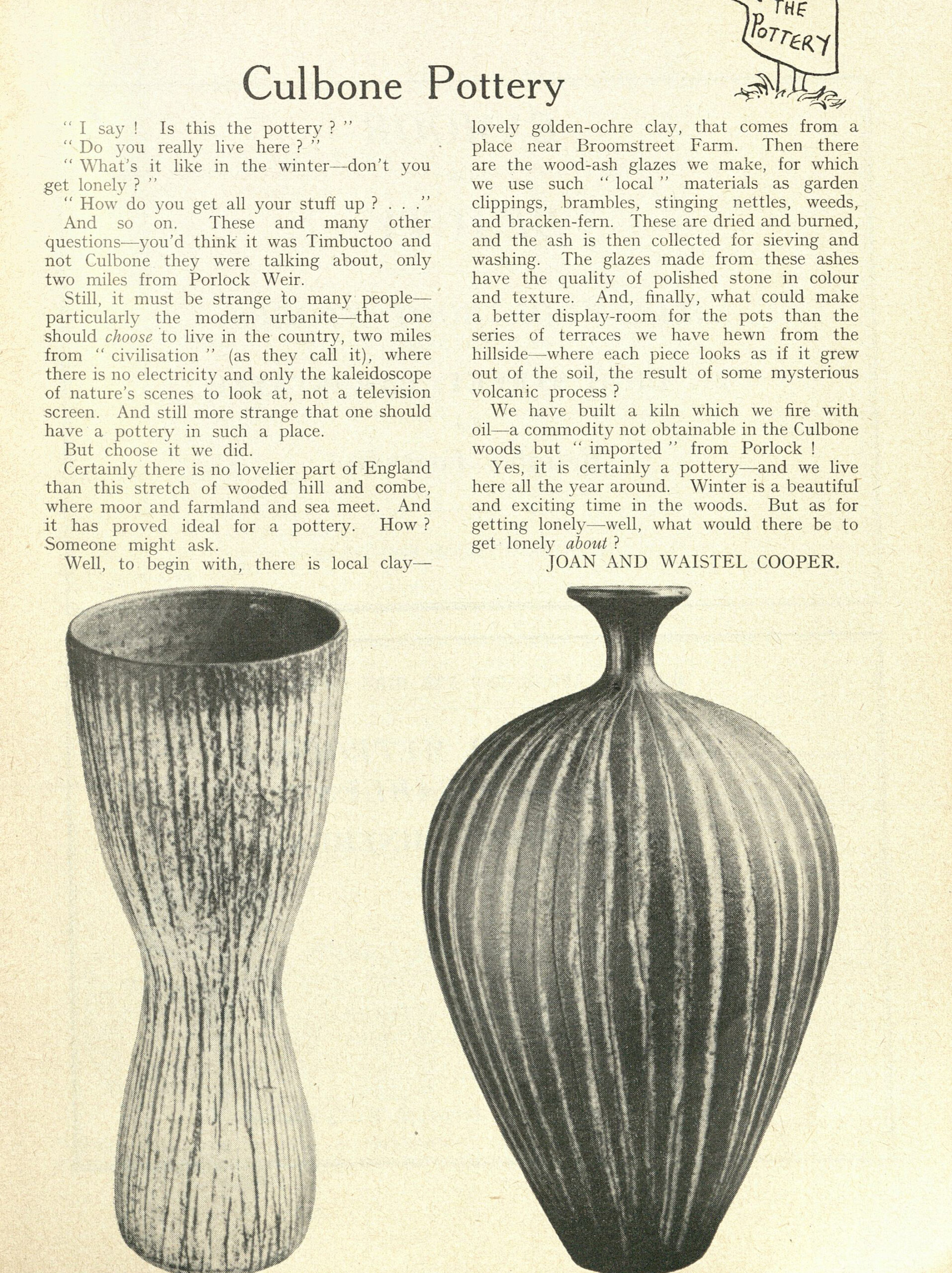
Waistel Cooper, Exmoor Review, 1959
Waistel Cooper Renault 4 advert
Culbone was accessible by car on a rough coastal track before a landslide destroyed the route

Though Culbone was geographically isolated, Cooper’s reputation grew steadily during these years. His work was exhibited alongside that of Lucie Rie, Hans Coper, and Ruth Duckworth — the avant-garde pioneers of post-war British ceramics — and in 1959 he was included in the landmark British Artist Craftsmen exhibition, where his ceramics were displayed alongside Henry Moore, Barbara Hepworth, and Ben Nicholson. By the early 1960s, museums and collectors in Britain and abroad had begun acquiring his work, recognising in it a distinctive voice that balanced modernist clarity with raw, natural force.
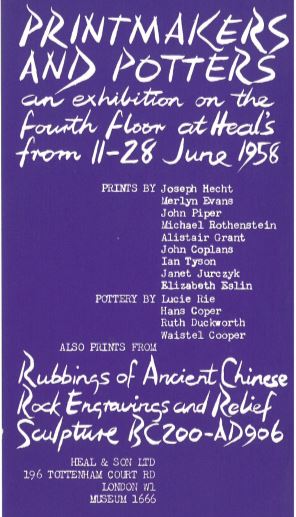
Waistel Cooper, Lucie Rie, Hans Coper, Ruth Duckworth exhibition at Heal & Son Mansard Gallery, 1958
Waistel Cooper in conversation with playwright Tom Stoppard at Waistel’s Arnolfini Gallery exhibition in 1962
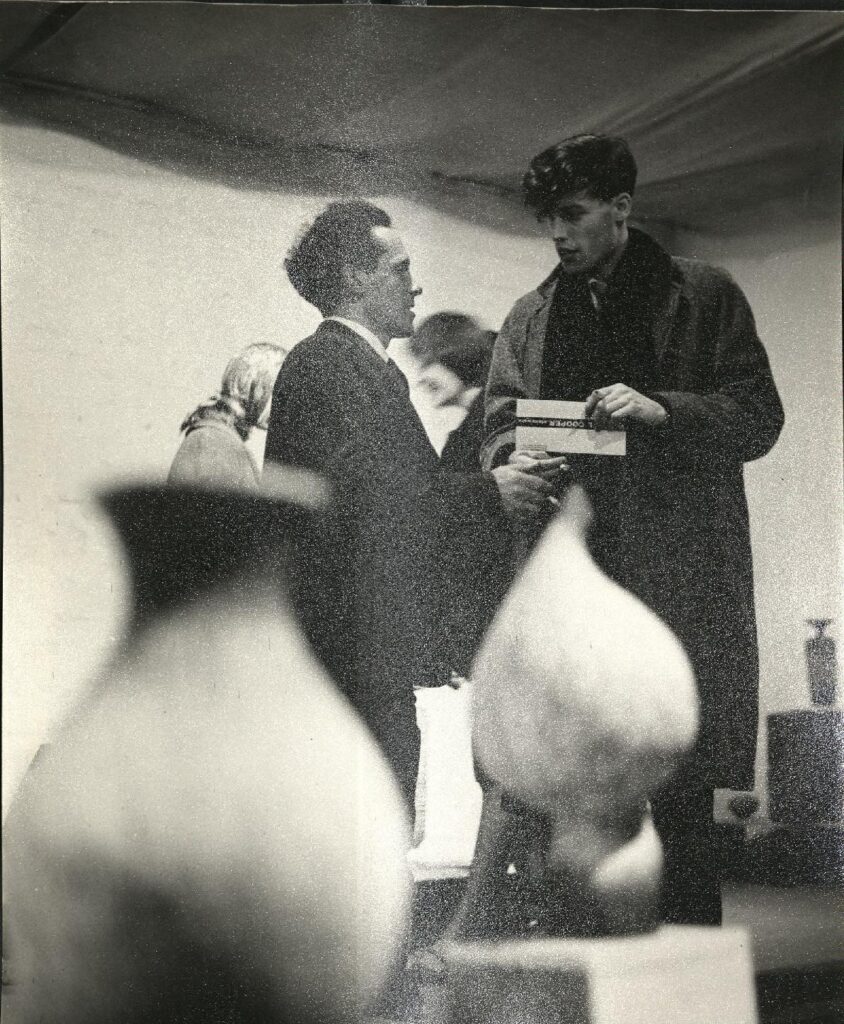
Yet Culbone also gave Cooper a refuge from the pressures of the wider art world. By the 1970s he had largely withdrawn from the gallery circuit, preferring to sell directly from his garden studio. This decision, coupled with the remoteness of his home, contributed to his gradual obscurity in later decades — even as he continued to make some of his most resonant and enduring works.
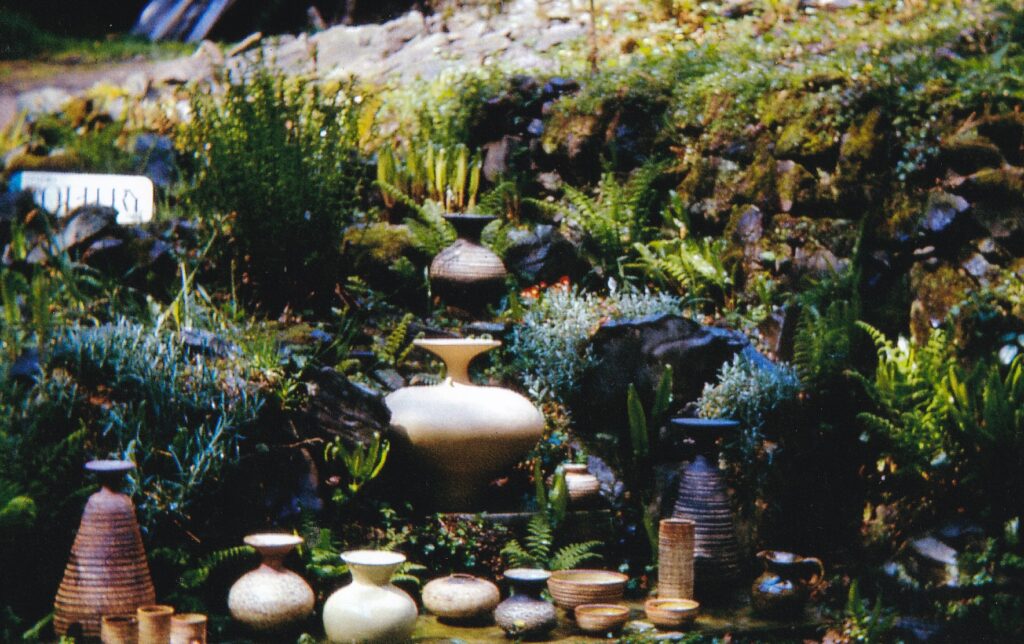
Waistel’s ceramics in the gardens at Culbone, 1973
The sixteen ceramics presented in this online exhibition span the breadth of Cooper’s Culbone years, from the late 1950s through to the 1970s. Together, they embody the dialogue between artist and environment: vessels shaped not only by clay and fire, but by the stillness, remoteness, and quiet power of Culbone itself.
Online exhibition
-
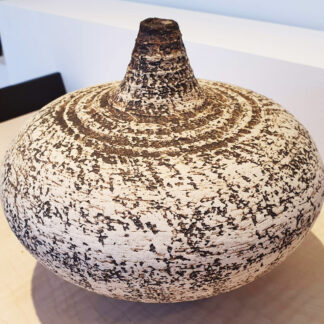
Waistel Cooper (1921-2003) – Ovoid Textured Vase
£1,500.00 -
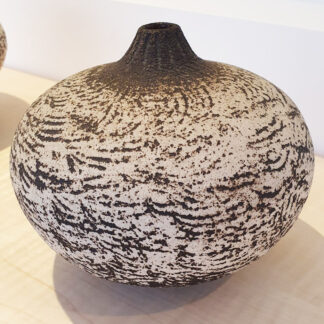
Waistel Cooper (1921-2003) – Ovoid Rough Textured Vase
£1,500.00 -
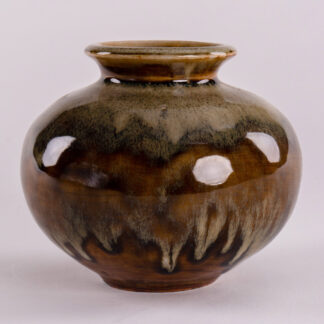
Waistel Cooper (1921-2003) – Glazed Globular Vase
£850.00 -
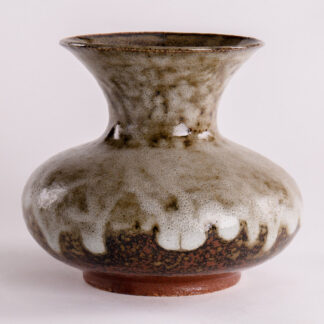
Waistel Cooper (1921-2003) – Glazed Squat Vase
£850.00 -
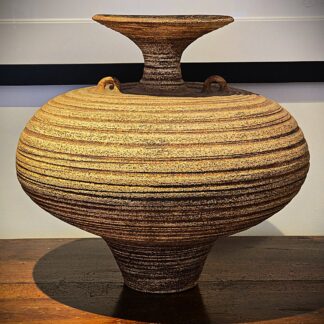
Waistel Cooper (1921-2003) – Monumental Lugged Vase
£6,500.00 -
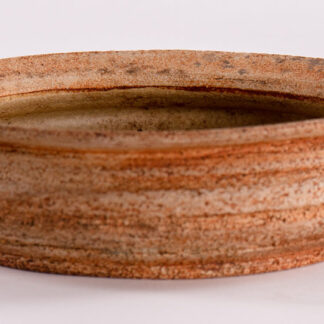
Waistel Cooper (1921-2003) – Ribbed Bowl
£450.00 -
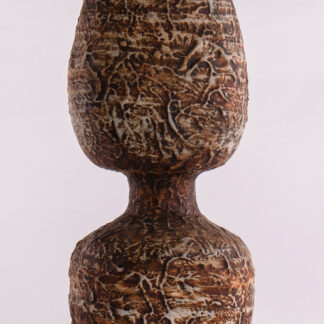
Waistel Cooper (1921-2003) – Totemic Vase
£2,500.00 -
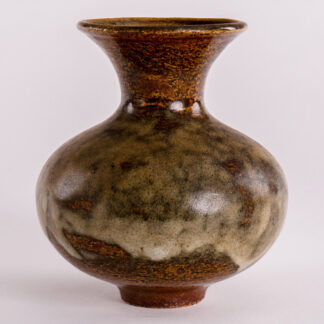
Waistel Cooper (1921-2003) – Dripware Baluster Vase
£950.00 -
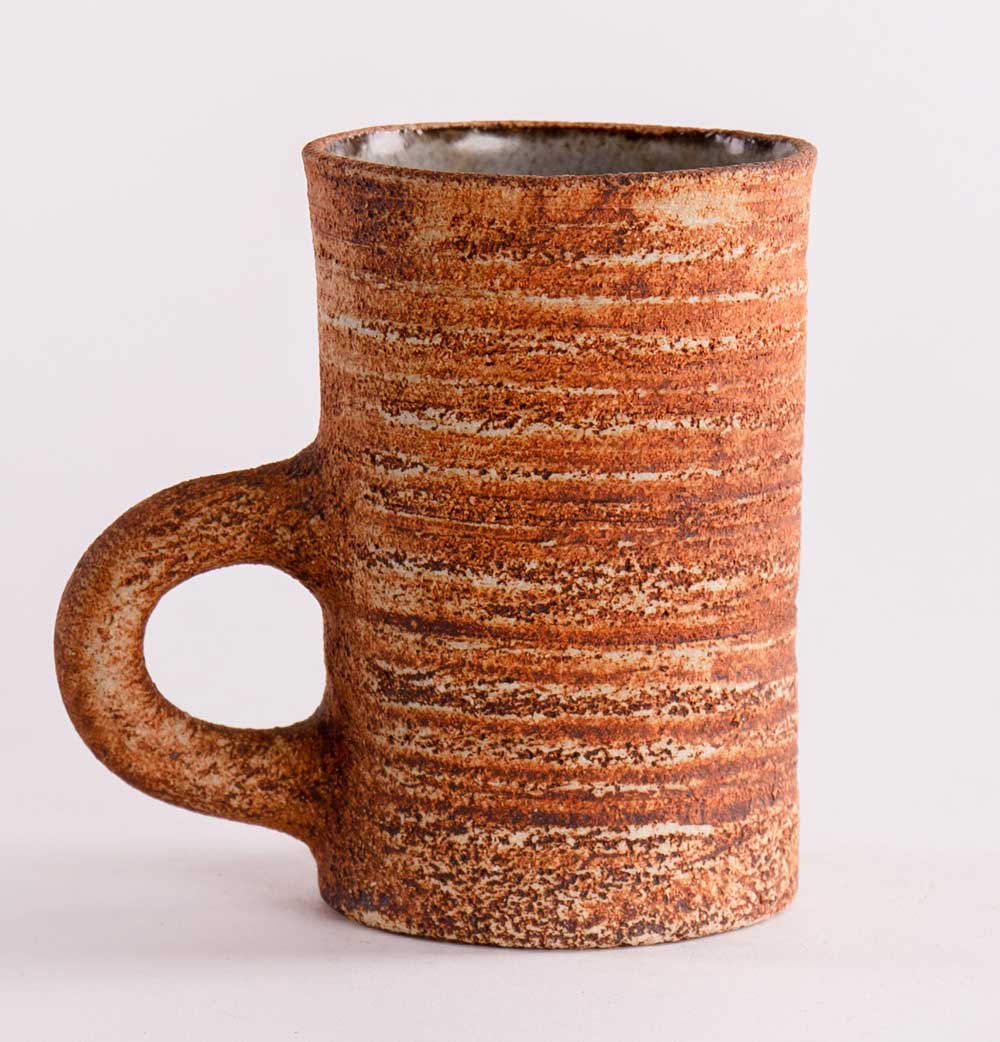
Waistel Cooper (1921-2003) – Rough Textured Mug
-
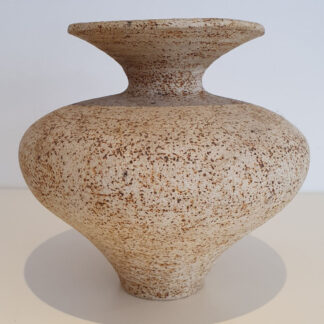
Waistel Cooper (1921-2003) – Baluster Vase
£2,000.00 -
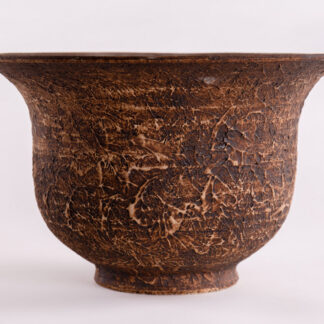
Waistel Cooper (1921-2003) – Bell Bowl
£1,250.00 -
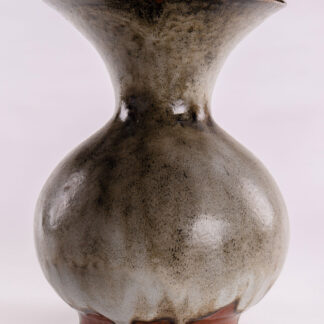
Waistel Cooper (1921-2003) – Monumental Baluster Vase
£3,800.00 -
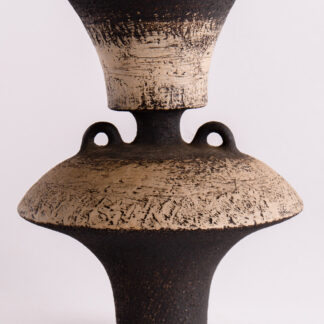
Waistel Cooper (1921-2003) – Dual Form Tulip Vase
£4,500.00 -
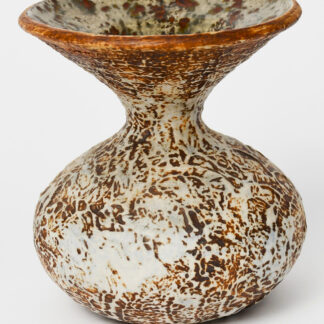
Waistel Cooper (1921-2003) – Flared Lip Baluster Vase
£550.00 -
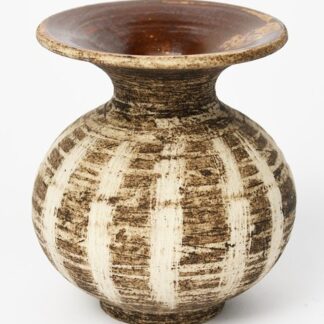
Waistel Cooper (1921-2003) – Flared Lip Globular Vase
£550.00 -
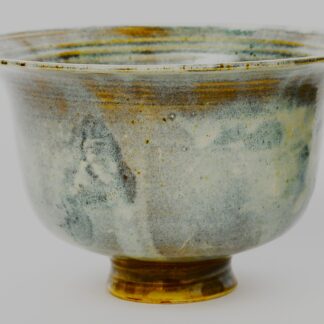
Waistel Cooper (1921-2003) – Glazed Bell Bowl
£950.00